
In the relentless world of metal cutting, the pursuit of speed, precision, and longevity is a constant tug‑of‑war. Every blade, whether it spins on a circular saw, rides the endless loop of a band saw, or hacks away on a reciprocating saw, endures extreme friction, heat, and wear. The unsung hero that can tip the balance in favor of performance is the air‑oil mist lubrication system—a clever blend of aerodynamics and fluid dynamics that delivers a fine, homogenous spray directly to the cutting interface. At its core, an air‑oil mist system works by atomizing a small quantity of oil into a cloud of microscopic droplets suspended in a high‑velocity air stream. The mixture, often described as a “mist, ” is generated by a high‑speed turbine or a compressed‑air nozzle that forces the oil through a finely calibrated orifice. The result is a lightweight, almost invisible veil that clings to the cutting edge and the workpiece, providing three critical functions at once. First, the mist acts as a cooling agent. Traditional flood lubrication drowns the cut with a thick film, which can obscure the operator’s view and cause excessive coolant buildup. The air‑oil mist, by contrast, carries heat away through rapid convection and the latent heat of vaporization of the oil droplets. Temperatures at the tooth tip fall dramatically, reducing thermal expansion of the blade and preserving its geometry for longer periods. Second, the mist supplies an ultra‑thin lubricating layer that dramatically lowers friction. The droplet size—typically ranging from 10 to 50 microns—creates a micro‑film that separates metal from metal without filling the tooth spaces. This ensures that the cutting edge can rake through the workpiece cleanly, minimizing chip adhesion and preventing the dreaded “built‑up edge” that ruins surface finish and forces premature blade replacement. Third, the mist improves chip evacuation. The high‑velocity air component of the spray sweeps away shavings and burrs, preventing them from lodging in the teeth or re‑impacting the cut surface. The result is a smoother, more consistent kerf and a reduction in secondary grinding or polishing steps downstream. For machines such as circular saws, the benefits are especially pronounced. The high rotational speeds generate heat at an alarming rate, and a mist system can cut the temperature rise by as much as 30 %. Band saws, with their long, continuous blades, gain from the mist’s ability to travel the entire length of the cut without pooling, preserving uniform tension and extending the blade’s service life. Even the rugged hack saw, often overlooked in precision contexts, finds an advantage: the mist’s fine spray penetrates the aggressive tooth geometry, reducing the force required by the operator and slashing fatigue. Installation is straightforward. A compact reservoir feeds oil to a pressure regulator, which then routes the fluid to a mist generator mounted near the spindle or blade guide. The system can be integrated with existing pneumatic lines, and most models feature adjustable flow rates, allowing operators to fine‑tune the concentration for different alloys, thicknesses, or cutting speeds. In practice, the air‑oil mist system becomes a silent partner—its presence barely noticeable, yet its impact unmistakable. Machines run cooler, blades last longer, and the overall cost of ownership drops as downtime for blade changes and coolant cleanup dwindles. In an industry where every fraction of a millimeter counts, the mist is not just an accessory; it is a catalyst for efficiency, quality, and sustainability.


This is your website preview.
Currently it only shows your basic business info. Start adding relevant business details such as description, images and products or services to gain your customers attention by using Boost 360 android app / iOS App / web portal.
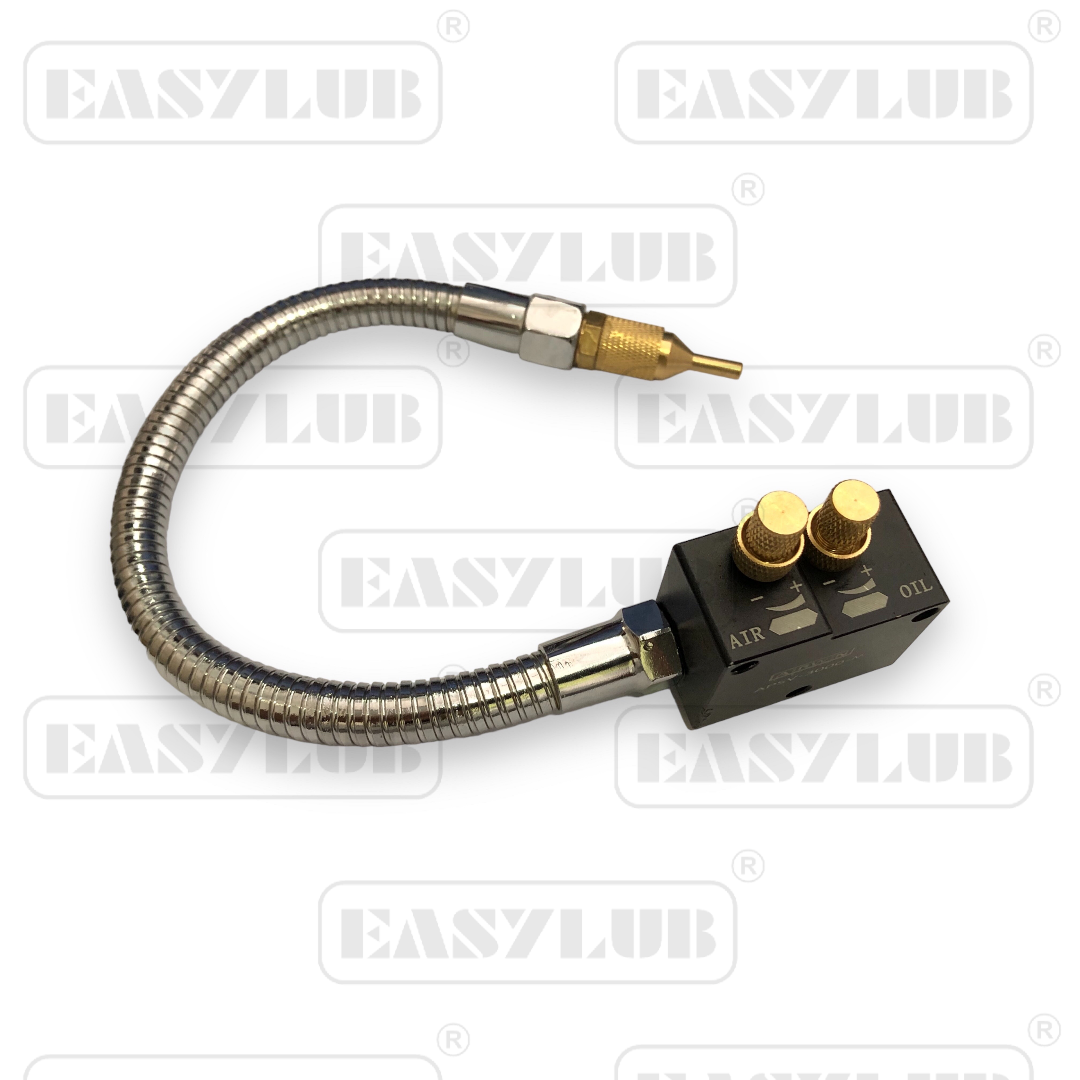
AIR-OIL MIST LUBRICATION NOZZLE.
2025-12-23T06:20:23
In the relentless world of metal cutting, the pursuit of speed, precision, and longevity is a constant tug‑of‑war. Every blade, whether it spins on a circular saw, rides the endless loop of a band saw, or hacks away on a reciprocating saw, endures extreme friction, heat, and wear. The unsung hero that can tip the balance in favor of performance is the air‑oil mist lubrication system—a clever blend of aerodynamics and fluid dynamics that delivers a fine, homogenous spray directly to the cutting interface. At its core, an air‑oil mist system works by atomizing a small quantity of oil into a cloud of microscopic droplets suspended in a high‑velocity air stream. The mixture, often described as a “mist, ” is generated by a high‑speed turbine or a compressed‑air nozzle that forces the oil through a finely calibrated orifice. The result is a lightweight, almost invisible veil that clings to the cutting edge and the workpiece, providing three critical functions at once. First, the mist acts as a cooling agent. Traditional flood lubrication drowns the cut with a thick film, which can obscure the operator’s view and cause excessive coolant buildup. The air‑oil mist, by contrast, carries heat away through rapid convection and the latent heat of vaporization of the oil droplets. Temperatures at the tooth tip fall dramatically, reducing thermal expansion of the blade and preserving its geometry for longer periods. Second, the mist supplies an ultra‑thin lubricating layer that dramatically lowers friction. The droplet size—typically ranging from 10 to 50 microns—creates a micro‑film that separates metal from metal without filling the tooth spaces. This ensures that the cutting edge can rake through the workpiece cleanly, minimizing chip adhesion and preventing the dreaded “built‑up edge” that ruins surface finish and forces premature blade replacement. Third, the mist improves chip evacuation. The high‑velocity air component of the spray sweeps away shavings and burrs, preventing them from lodging in the teeth or re‑impacting the cut surface. The result is a smoother, more consistent kerf and a reduction in secondary grinding or polishing steps downstream. For machines such as circular saws, the benefits are especially pronounced. The high rotational speeds generate heat at an alarming rate, and a mist system can cut the temperature rise by as much as 30 %. Band saws, with their long, continuous blades, gain from the mist’s ability to travel the entire length of the cut without pooling, preserving uniform tension and extending the blade’s service life. Even the rugged hack saw, often overlooked in precision contexts, finds an advantage: the mist’s fine spray penetrates the aggressive tooth geometry, reducing the force required by the operator and slashing fatigue. Installation is straightforward. A compact reservoir feeds oil to a pressure regulator, which then routes the fluid to a mist generator mounted near the spindle or blade guide. The system can be integrated with existing pneumatic lines, and most models feature adjustable flow rates, allowing operators to fine‑tune the concentration for different alloys, thicknesses, or cutting speeds. In practice, the air‑oil mist system becomes a silent partner—its presence barely noticeable, yet its impact unmistakable. Machines run cooler, blades last longer, and the overall cost of ownership drops as downtime for blade changes and coolant cleanup dwindles. In an industry where every fraction of a millimeter counts, the mist is not just an accessory; it is a catalyst for efficiency, quality, and sustainability.
2025-12-23T06:20:23


Submit Your Enquiry